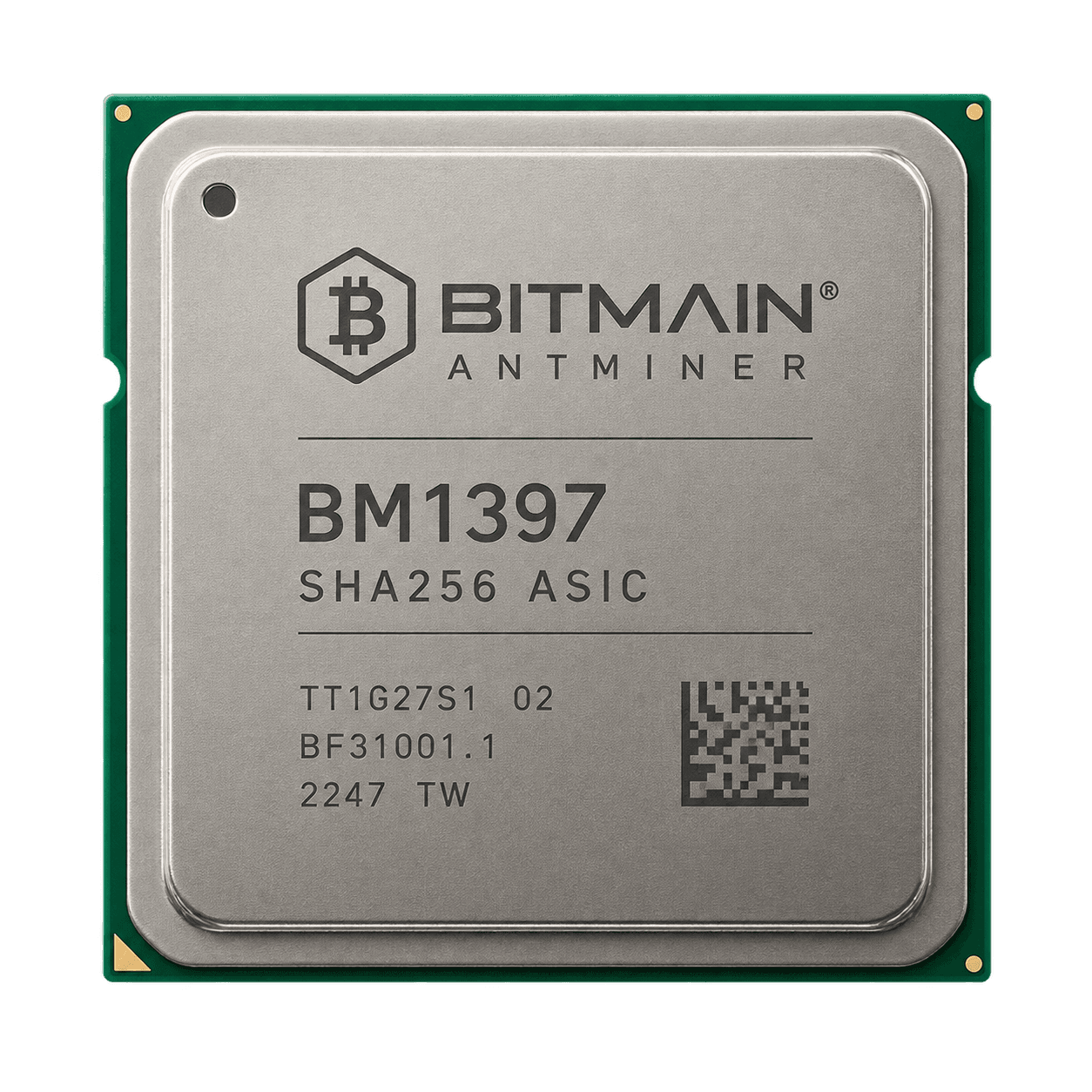
- CHIPS PER BATCH
- 72
- PROCESS NODE
- 5 nm
- ADDED HASHRATE
- 26 TH/s
- ADDED POWER
- 390 W
- FUNCTION
- SHA-256d only
- CLOCK
- ~675 MHz typical
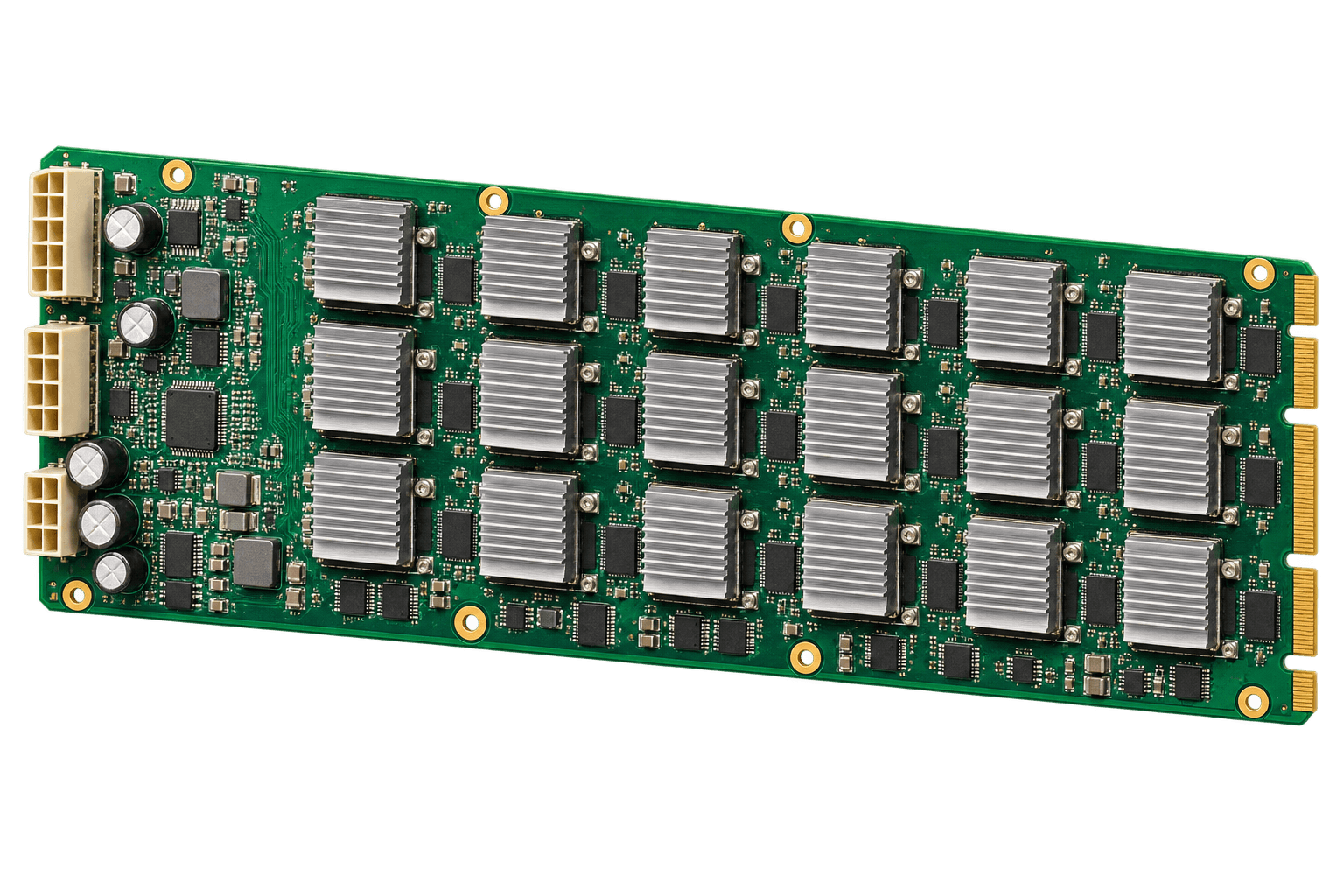
ASIC chip batch
The smallest unit of work in the entire network, sold seventy two at a time.
What it does
A mining ASIC is a die whose transistors have been laid out to compute one hash function and nothing else. There is no fetch, no decode, no branching. The SHA-256 round constants are physically baked into the silicon path. Data enters one end and a hash falls out the other, and the only variable is how many of these pipelines the manufacturer could fit on the die at a given process node.
This is why process shrinks matter so much in mining and so little elsewhere. Moving from 7 nm to 5 nm does not make the chip smarter, because it was never smart. It makes each hash cost fewer picojoules, which moves the entire economics of the machine. Efficiency in joules per terahash is the number miners actually compete on, and it is set almost entirely here.
Populating spare footprints is the cheapest hashrate you can buy per terahash, because you are adding chips to boards, power delivery and cooling you already own.
Chips degrade with sustained heat and voltage. A degraded chip returns invalid nonces, which the pool counts as hardware errors rather than shares.